A practical troubleshooting guide for bottled and barrel water filling machines: inaccurate fill volumes, product back-flow, cylinders that do not return and preventive replacement parts.
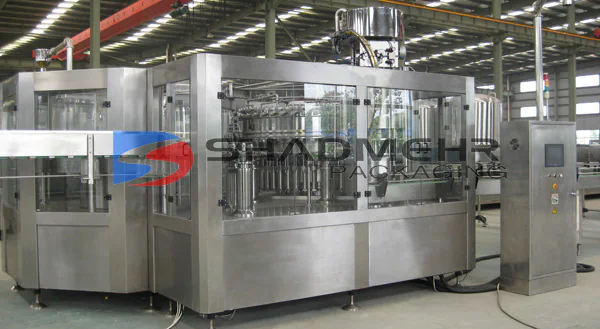
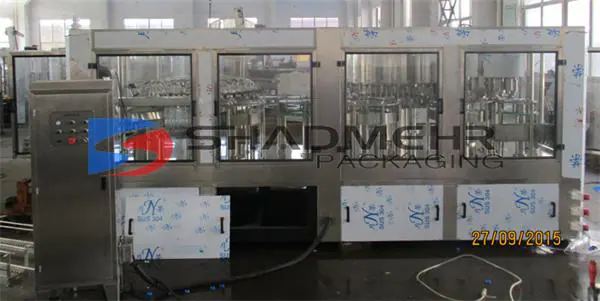
Bottled water filling machines are the workhorses of purified and mineral water plants. A typical 3-in-1 monobloc rinses, fills and caps PET bottles in one enclosed machine, while barrel fillers for 3 and 5 gallon containers combine washing, sterilising, filling and capping. Because the whole process runs in a closed state, the risk of secondary contamination is low — but only if the machine is kept in good adjustment.
Most stoppages we see in the field trace back to a handful of pneumatic and valve issues. Here is how to recognise and fix them.
How a modern water filler works
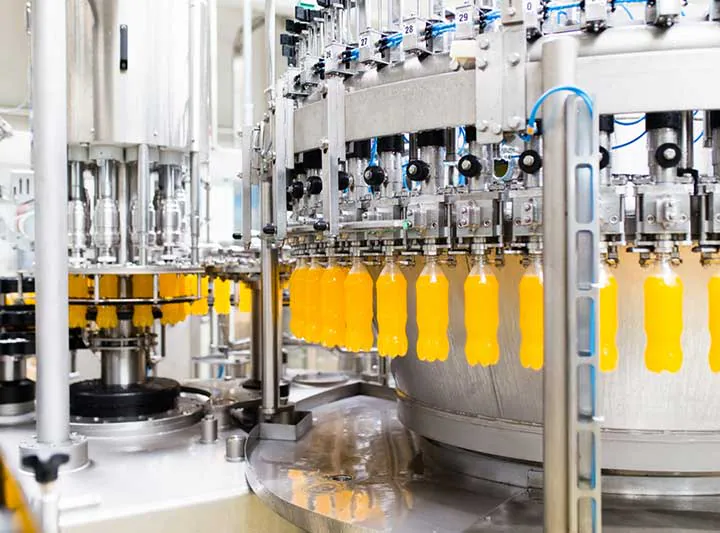
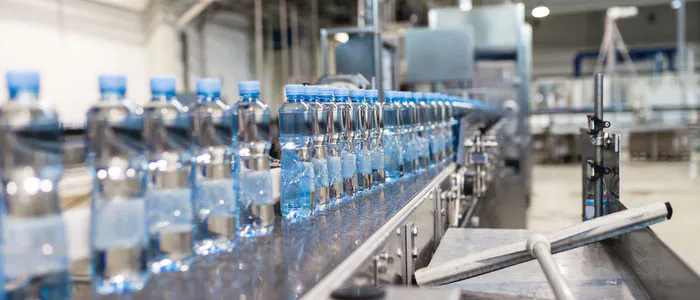
In a rinse-fill-cap monobloc, bottles enter through an air conveyor and are carried by the neck through the rinser, filler and capper. A PLC (for example from Omron) controls the sequence, the bottle-infeed chain runs on a frequency inverter for smooth speed control, and photoelectric sensors monitor each station. Bottle-size adjustments are made with hand wheels, so changeovers are quick. Filling is typically by gravity or micro-pressure, which is fast and stable for still water.
The rinser uses independently controlled high-pressure spray systems, and the disinfectant and rinse water can be recycled. Barrel water fillers work on the same principles at lower speeds, and can usually be operated by one or two people on a 380 V three-phase supply.
Fault 1 — Inaccurate or inconsistent fill volume
When the fill volume drifts or bottles come out under-filled, check the following in order:
- Throttle valves. The filling-speed throttle and the filling-interval throttle must open and close fully. A throttle that cannot shut off will cause over-filling and dripping.
- Air in the product hose. Trapped air reduces the volume delivered on each cycle. Bleed the hose and eliminate leaks on the suction side.
- Delayed valve opening. If the valve opens late, adjust the throttle on the small actuating cylinder.
- Check-valve spring tension. The compression springs inside the three-way control valve set how easily the check valve opens. If the spring is too stiff, the valve will not open completely — reduce the tension until it operates cleanly.
Fault 2 — Product flows back from the cylinder
Back-flow from the metering cylinder usually means mechanical misalignment or a worn seal:
- Confirm the cylinder is centred in its mounting. If it has shifted, re-install it in the correct position.
- Check that the piston is tight on the piston rod and re-lock it if it is loose.
- Inspect the piston O-ring. A damaged O-ring lets product bypass the piston and must be replaced.
Fault 3 — The piston reaches the top but does not return
This is almost always a sensing problem. The reed (magnetic) switch that signals the end of stroke is out of position, or the emergency stop has been pressed. Release the emergency stop, then re-position the magnetic switch so that it is triggered reliably at the end of the stroke.
Preventive maintenance that avoids most stoppages
- Treat cylinder O-rings and the two magnetic switches as wear parts and replace them on a schedule rather than waiting for failure.
- If a filling-valve spool sticks, remove it, clean it and re-install it in the correct position.
- After any adjustment, make sure the magnetic switches are firmly fixed at the rear of the cylinder so they cannot move during operation.
- Keep a stock of the wearing parts supplied with the machine — during the warranty period we supply them free of charge.
When to call the manufacturer
If a fault persists after these checks, contact our service team with the machine model, a description and, ideally, a short video. Most problems can be solved by phone or video call; if not, we arrange a technician to visit your plant.