How to translate a sales forecast into bottles per hour, why the bottle size matters, and how to plan a water bottling line that leaves room to grow.
Line capacity is the first number in every quotation — and the one most often chosen by guesswork. Too small and you will run overtime from day one; too large and you pay for machines that sit idle. Here is the method our engineers use.
1. Start from demand, not from machines
Estimate how many bottles you need to sell per day in your second or third year, not just at launch. Then divide by the hours you realistically plan to run:
Required BPH = daily bottles ÷ (shifts × hours per shift × line efficiency)
Use a line efficiency of around 85% — the acceptance target we commit to for complete lines — to allow for changeovers, cleaning and short stops.
Example: 40,000 bottles a day on one 8-hour shift at 85% efficiency needs about 5,900 BPH. Running two shifts brings this down to roughly 2,950 BPH — a very different line.
2. Quote capacity at a reference bottle size
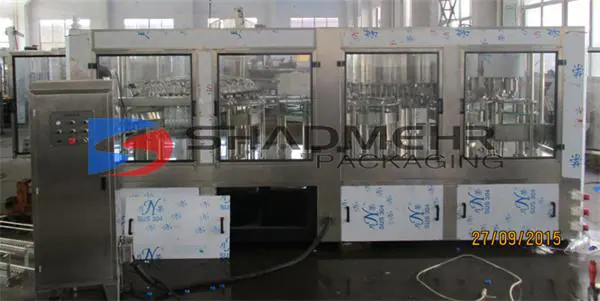
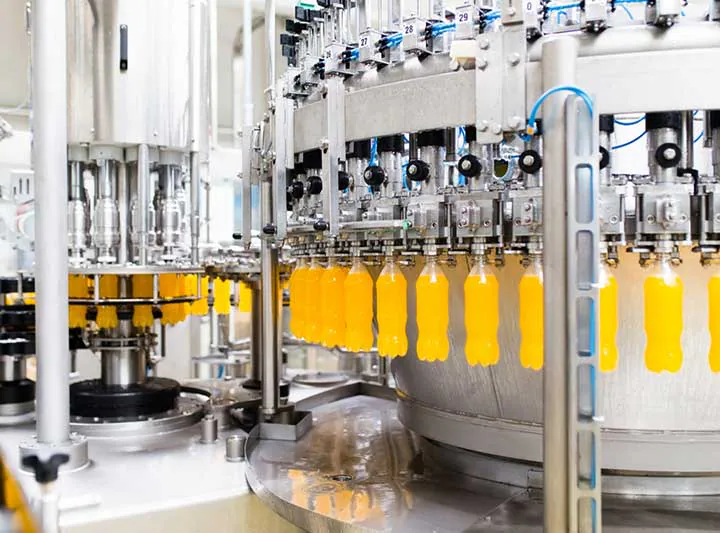
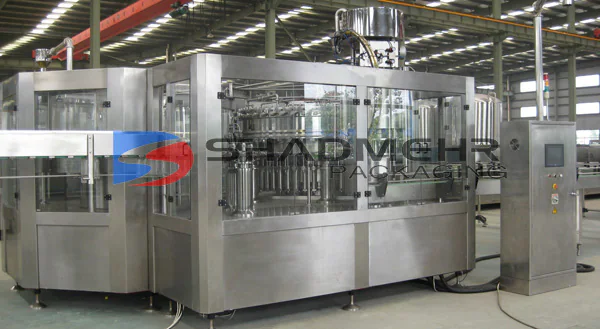
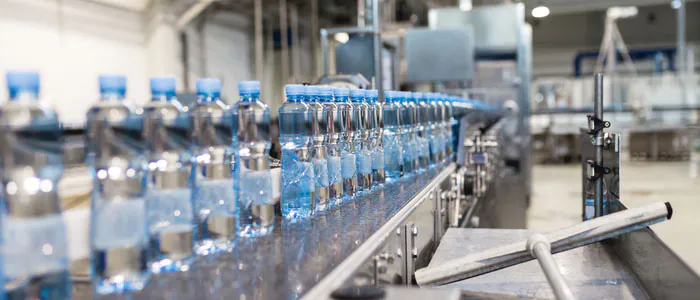
Filler capacity is always stated for a specific bottle — our pure water lines are rated at 500 ml. Larger bottles take longer to fill, so a line rated at 5,000 BPH for 500 ml will run slower on 1.5 L. Tell us every size you plan to produce; the filler, conveyors and packer are sized for the most demanding one.
3. Size water treatment to the filler — with margin
The water treatment system must deliver more treated water than the filler consumes, because rinsing, cleaning and RO reject water add to demand. Source water quality matters too: high hardness may require softening ahead of reverse osmosis.
4. Match downstream packing
A fast filler is wasted if the packer cannot keep up. Decide early on your packing format — for example 4×6 film packs for 500 ml and 2×3 for 1.5 L — and whether you need case packing and palletising.
5. Plan for growth
- Reserve floor space in the layout for a second filler or a larger packer.
- Specify water treatment and utilities (compressed air, power) for the next capacity step.
- Choose a monobloc with spare heads or a frame size that supports an upgrade.
Our reference water lines
Our pure water lines cover 2,000–3,000, 4,000–5,000, 5,000–6,000, 8,000 and 10,000 BPH. Each comes with a layout drawing and an equipment list you can download, and we adapt it to your bottles, caps and power supply.