What hot filling is, how it protects juice and tea without preservatives, which bottles it needs and what equipment a hot-fill line includes compared with cold filling.
Juice, tea and many functional drinks are low-acid enough to spoil quickly once opened to microorganisms — yet most producers want to avoid preservatives. Hot filling is the most widely used way to achieve a long, shelf-stable life in PET bottles.
What is hot filling?
The product is first heat-treated in a UHT or HTST sterilizer, then filled into the bottle while still hot. The hot liquid sterilises the inside of the container; the bottle is then inverted or passed through a head-space sterilizer so the hot product also treats the cap and neck. Finally a cooling tunnel brings the bottles down to a safe temperature for labelling and packing.
A typical hot-fill line
- Water treatment and sugar dissolving
- Blending and, for pulpy or cloudy products, homogenising and de-aeration
- UHT / HTST sterilisation
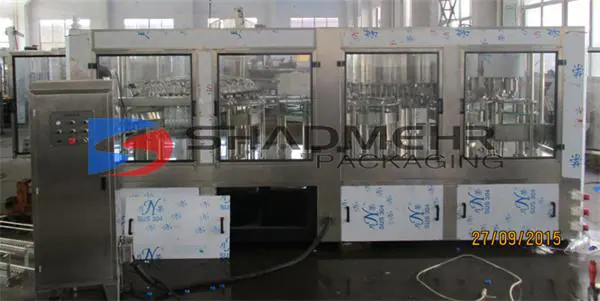
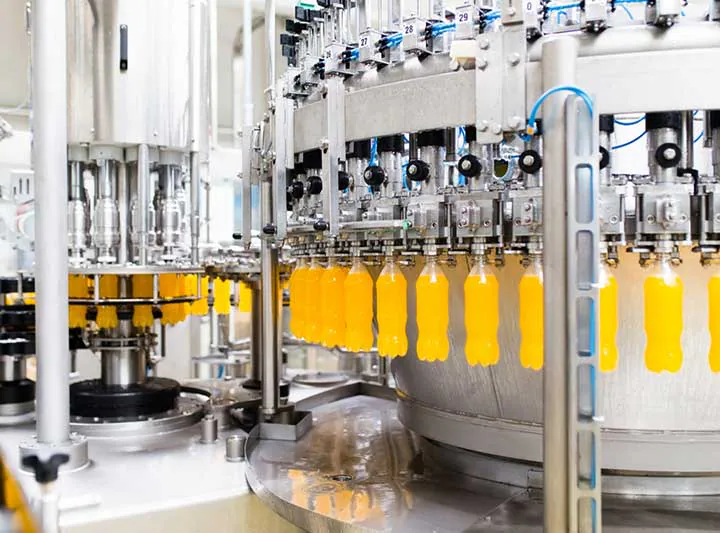
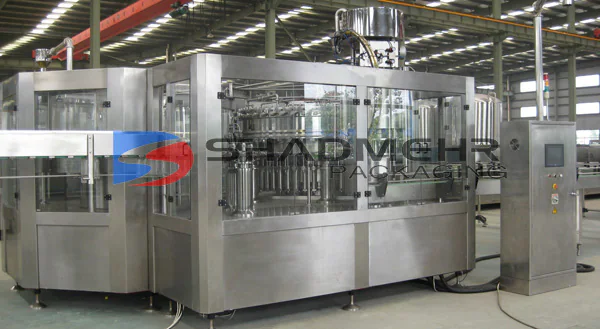
- Hot filling and capping in a 3-in-1 monobloc
- Bottle inverting / head-space sterilising
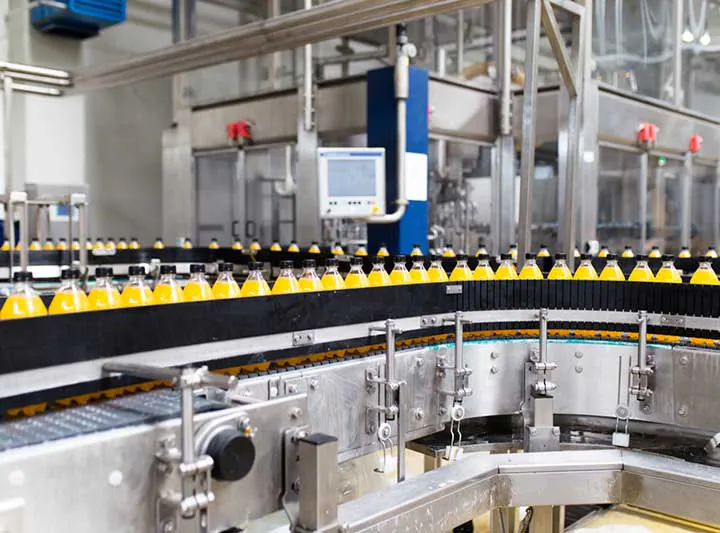
- Showering and cooling tunnel
- Bottle warmer or drying, labelling and packing
Bottles for hot filling
Standard PET deforms at hot-fill temperatures. Hot-fill bottles use heat-set PET, thicker walls and vacuum panels that absorb the contraction as the product cools. Bring your bottle samples early: the filler, star wheels and capper are built around them.
Cold filling
In cold (ambient) filling the product is filled at room temperature. It is the standard for still water and — combined with isobaric filling — for carbonated drinks, which must be kept cold to hold their CO₂. For sensitive drinks without preservatives, cold filling requires a controlled, ultra-clean or aseptic filling environment instead of heat.
Which should you choose?
| Hot filling | Cold filling | |
| Typical products | Juice, tea, isotonic drinks | Water, carbonated drinks, beer |
| Bottle | Heat-set PET or glass | Standard PET, glass, cans |
| Extra equipment | Sterilizer, inverting, cooling tunnel | Chiller, carbonator (for CSD) |
| Energy use | Higher (heating and cooling) | Lower |
If your product is juice or tea and you want a robust, proven process, hot filling is usually the right starting point. Our juice lines from 1,000 to 8,000 BPH are built around it.